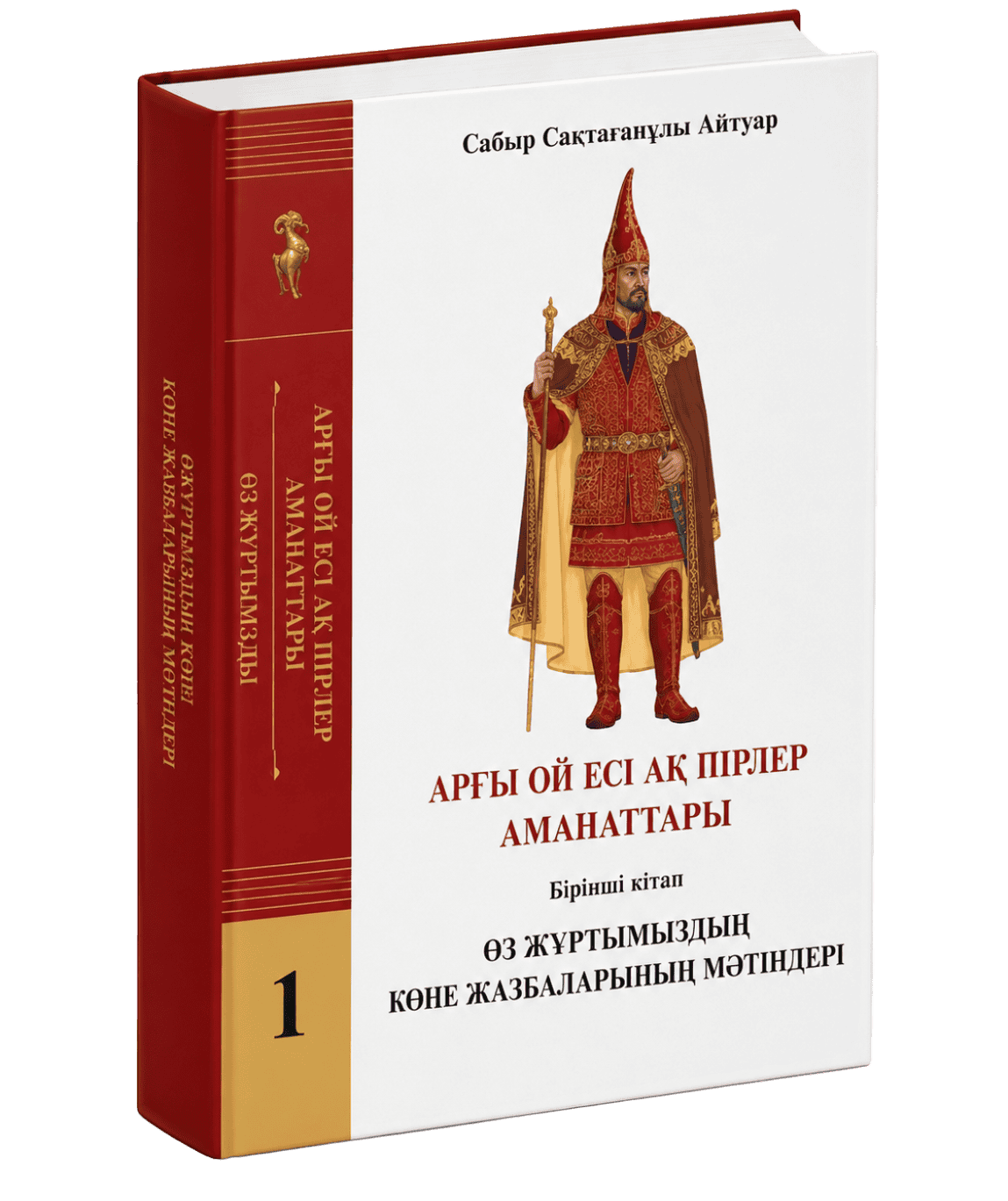
Sabyr Saktaganuly Aituar

Texts of Ancient Writings

Book One · Texts of Ancient Writings by Sabyr Saktaganuly Aituar — Unveiling ancient Turkic runic scripts, Orkhon inscriptions, and the ancestral heritage of the Eurasian steppe.

Reviving the written Thought of our Ancestors — forgotten for millennia and turned to legend — to bring it back to their own people.

Texts of Ancient Writings

On the Thought written into ancient legends and the inscriptions of rock cliffs

Preface

Our Preface

On our website titled “Ancient Written Texts”, the aim was to explain the original texts of the legendary ancient Writings belonging to the peoples of the world. Our goal was to understand the Written Thought of the Ancients—the Thought of the Ancients that had turned into legends and tales. In order to understand the Thought of the Ancients, we first paid attention to the language they spoke and to the “untranslated” words frequently found in these legends.

By examining the “untranslated” words occurring in Greek myths, we noticed remarkable resemblances—for example, the word Achilles to the Kazakh Akyl Esi (“Mind and Reason”), Heracles to Kyragyl (“Keen-sighted”), Troy to Tiri Oi (“Living Thought”), Prometheus to Pirler Ilim Oty (“The Fire of Masters’ Knowledge”), Perseus to Oi Beru Esi (“Reason of Imparting Thought”), Athena to Kapy Esi (“Gate of Mind”), and Homer’s Odyssey to Gumyr Otisi (“The Passing of Life”). Having noticed that the words found in ancient legends resemble Kazakh words, we conducted research by translating them into Kazakh to comprehend their original text. Thus, focusing on the “untranslated” words in ancient legends and elaborating the Written Thought, we began translating them into the Kazakh language. During the translation process, we observed how the underlying thought of ancient myths began to shift. We thereby came to realize that the ancient legends of other peoples had undergone alterations and started conveying different meanings, revealing what language the original creators of these legendary ancient works actually spoke. As we gradually mastered the ancient legends and followed the unfolding chain of Written Thought, we began to truly comprehend the Thought of the Inscriptions.

We understood that if our thought aligns with the Thought of the Holy Ones, it is possible to comprehend the Written Thought. Over time, we gradually began to grasp the Thought of the Ancients. From the Thought of the Holy Ones, we discovered their Teachings regarding the “Celestial Fields” (Kok Oristei). In the inscriptions on the White Mounds (Pyramids), the Holy Ones described the correspondence between the “Celestial Fields”—the “Celestial Way”—and the Mounds (pyramids) in Egypt (Ekibettegi Uiindiler), recounting how they traveled along the “Celestial Fields” aboard “Celestial Voyagers” (Kok Sharlaushylary). We realized that the “Celestial Fields” emanate from the “Celestial Expanse” (Kok Zhadyry) and harbor a tremendous source of Energy. Furthermore, many profound matters are elucidated in the Testaments written for their descendants by our ancestral Holy Fathers of Ancient Spirit—the Khas Oi Esi Ak (Kazakh) or Oi Esi Ak (Sak). These insights can be explored and learned from our books.

Annotation

Annotation

Few people know of the written Testaments left to their descendants by our Ancestors—who inhabited and held dominion over the earth for thousands, even hundreds of thousands of years, and whose science and culture were highly developed. Because ancient words embedded within legends have not been fully studied and their original texts deciphered, we have long failed to grasp the Thought that our ancient Ancestors sought to convey to today’s generations. Now, the time has come to revive the written Thought that was forgotten for millennia and turned into legend, and to unlock once again the secrets of ancient myths. In this regard, researcher Sabyr Saktaganuly Aituar deems it vital to restore the ancient writings of our Ancestors that fell into the possession of other peoples—including inscriptions inside Egyptian pyramids, on balbal stones across various lands, and in legendary ancient Kazakh writings—and to present them first and foremost to his own People, the descendants of our Sacred Turkic (Thought-Structured) People.

Upon reading this book, we trust that scholars of astronomy, historians researching our People’s past eras, literary scholars studying the texts of ancient epics, cultural anthropologists exploring Tengrist religious beliefs, customs and traditions, genealogies, calendars, and the origin of ancient runes, as well as general readers, will take a keen interest in the ancient Inscriptions of the ancient Khas Oi Esi Ak (Kazakh) or Oi Esi Ak (Sak) People, and look favorably upon the Written Thought bequeathed by our Ancient Ancestors to their descendants.

Contents

The Book Consists of Three Parts

01

Part One

Texts of inscriptions inside the Pyramids in Egypt

  • 1.1. A few words regarding the Pyramids in the Land of Egypt
  • 1.2. On the Writings of the Holy Ones intended for the "Mortals"
  • 1.3. Contemplation of the Holy Ones dedicated to the "Mortals"
  • First Chapter. On the Contemplation of the Holy Ones
  • Second Chapter. Let the "Mortals" turn toward the Writings of the Holy Ones of Ancient Spirit
  • Third Chapter. Our Testaments
  • Fourth Chapter. Our Amulets and Talismans
  • 2. Texts of ancient Writings discovered in Egypt
  • 2.1. Testaments of the Masters of Noble Thought (Texts in the Pyramids)
  • 2.2. Treaties written on blue stone tablets: Treaties titled "Remembrances of our Man who Grasps the Thought of Inscriptions, Dedicated to the Living Men of Thought"
  • 2.3. We explained the Text of Inscriptions on the High Pyramids to our Man who Grasps the Thought of Inscriptions
  • 2.4. We dedicated our Famous Writings to our Man who Cherishes Ancestral Thought
  • 2.5. Text of the Inscriptions on the balbal stone regarding the Teachings of the ancient Masters of "Celestial Fields"
  • 2.6. Text of the writings on the balbal stone titled "Precepts of the Masters of 'Celestial Weavings'" (Rosetta)
02

Part Two

Texts of inscriptions in the Orkhon-Yenisey valley

  • 2.1. We dedicated this to the "Men of Brave Lineage" (Kultegin)
  • 2.2. On the Wise Man who understood the Thought of the "Celestial Flow" Writings (Bilge Khagan)
  • 2.3. "The Node of our Teachings Resides in the Heavens" (Tonyukuk)
  • 2.4. "May the Concept of our Thought Reach our Land" (El Etmish Yabgu)
  • 2.5. "Let Us Grasp the Knot of the Inscriptions" (Tuy-ukuk)
  • 2.6. Text of the Ongin balbal stone Writings
  • 2.7. Text of the Writings on the Shaiyrlar (Choir) balbal
  • 2.8. Inscriptions on the "Suuzhiyn" balbal
  • 2.9. Text of the Writings on the Kuli-Chor balbal stone 2.10. "Voice of Weavings" (Runic) writings in the Land of Tuva
  • 2.11. Text of the Writings on the Tes balbal stone
  • 2.12. Runic monuments found in the Land of Khakassia
  • 2.13. On the Writings bequeathed by our Ancestors on the Khangidai cliffs in Central Mongolia
03

Part Three

Texts of ancient Kazakh legends

  • 3.1. On our Hero who took pride in our Writings in the Giant Pyramids (Alpamys Batyr)
  • 3.2. On our Hero who came to see our Writings in our Camp and recounted the graceful Thought of Inscriptions (Qozy Korpesh and Bayan Sulu)
  • 3.3. On our Hero who conveyed the Thought of Inscriptions in the South (Er Tostik)
  • 3.4. Legend of the blessed Masters of Writings in the Structure (Korkyt Ata)
  • 3.5. Legend of the Men whom arrows cannot reach (Oqjetpes)
  • 3.6. Golden Inscriptions of our Pure-Minded People written in golden letters (Altyn Saqa)
  • 3.7. We lamented our Writings titled "Abyssal Fields" in the Giant Pyramids
  • 3.8. Giant Structures — these standing "Weavings of Celestial Soaring"
Additional Material

On the Thought written into ancient legends and the inscriptions of rock cliffs

On the Thought written into ancient legends and the inscriptions of rock cliffs

Dear readers who have taken an interest in this book! The primary purpose of this book is to revive the Testaments and Written Thought bequeathed to their descendants by our Sacred Ancestors of Ancient Spirit—the Oi Esi Ak or Isi Ak (Sak)—and to explain the forgotten texts of ancient Writings that have been appropriated by other peoples.

Textual criticism is the most essential discipline for linguists. Without it, interpreting the Thought of ancient Inscriptions and their true meaning is no easy task. It requires providing explanations for the archaic words in myths, tales, and narratives that have survived from antiquity to the present day, and reconstructing their original texts.

At present, there are virtually no researchers who fully explain the thought behind ancient legends—both our own and those that have become the national literature of foreign peoples—and restore them to their original text. Has anyone, in particular, paid close attention to the “obscure or untranslated words” in ancient writings? Do we truly understand what the term Legend (Anyz) means in its essence? Do we know what the Ancients wished to tell their Descendants? To this day, there are no satisfactory answers to these questions. Because researchers could not decipher the texts of ancient legends, most people simply consider these works to be fantasy fairy tales.

During our research, we focused particularly on places where the thoughts expressed in the preserved versions of legends did not seem to align properly. Concluding that if the Thoughts of the “Ancient Pirs” in the legends could form a coherent chain of Written Thought, then the central Node of the Legend’s Thought must exist, we continued our investigation. Thus, we reworked passages where the rhyme and reasoning of ancient writings were disjointed, reconstructing them independently into their original textual form. If the Thoughts expressed in the legends of the “Ancients” broke off and the linguistic harmony within the sentence failed to align, we chose not to pursue that branch of thought further. In restoring ancient Writings to their original text, not only did we translate them into Kazakh, but as we re-examined them through our understanding of the nature of Universal Creation, we noticed that the narrative of these legends immediately transformed. In essence, these were the Testaments of our ancient Ancestors—works in which they committed their Contemplations and Reflections into writing for future Generations. In truth, we came to realize that these were Sacred Testaments regarding the Teachings of Ancestral Thought left to their Descendants in the form of epic verse, passed down to us through the ancient scripts of Orim Uni (as we call them, whereas European scholars refer to them as “Runic letters”, S.S.A.). We became convinced that these were not works of fiction.

One can observe striking similarities in the texts of ancient myths and epics held in the traditions of the early migrants to Egypt (Pharaohs), the Land of Ancestors (Babylon), the Land of Thought Process (Persia), the peoples of India, the Greeks (Kirikter), the Masters of Knowledge of the “Celestial Ingathering” living on the other side of the Earth (Maya), the Khas Oi lineage (Aztecs), Germanic-Norse, and Russian-Slavic peoples, as well as others. We arrived at the view that these peoples likely transcribed the legends of our ancient Ancestors into their own languages in early times. Despite the lack of direct contact among these distant nations in antiquity, the textual convergence of their legends astonished us. At that time, their lifestyles and cultures were far from uniform, and their writing systems did not emerge simultaneously. For instance, while writings from the Land of Ancestors (Babylon) and the Pharaohs date back to 2,500–2,000 BCE, we know from history that the written traditions of China and India emerged between 1000–500 BCE, and ancient Greek legends began taking form around 700–500 BCE. The early written culture of Germanic-Norse peoples emerged around 200–400 CE, whereas Russian written culture arose even later, only in the 9th–10th centuries CE. It is astonishing that texts composed in such vastly different eras and recorded by scribes of diverse peoples contain identical Thoughts; such uniformity across separate traditions would otherwise be impossible. To give just one example: the phrase “Celestial Weavings” (Kok Orimderi), frequently encountered in myths, carries a remarkably profound meaning and concept. It describes concepts that modern astronomers have not even conceived. Why was the Thought of the Ancients identical across these ancient works? Did people living in distant antiquity all master the Science of astronomy to the same degree? That was the riddle we set out to solve.

As we deepened our understanding of ancient legends, we recognized that they were not works of fiction. What could explain why these legends share a single Text and a single Thought? We concluded that in antiquity, there must have been a neighboring, highly cultured People alongside these nations.

Representatives of other peoples, having learned the language of this Sacred Ancient People, originally read and used their writings using this People’s alphabet. Over time, taking the ancient script of our Sacred Ancestors as a foundation, they devised new alphabets of their own. Without fully grasping the true Text of our Ancient Ancestors’ Writings, they translated them into their own languages according to their own interpretations. Appropriating the creations of our Ancestors of Ancient Spirit, they eventually traded in “their own books” and proclaimed themselves Masters of the Written Word.

Because the scribes of these foreign nations were unable to translate unfamiliar words appearing in the epics (for ancient legends were mostly composed in poetic form)—especially when encountering passages concerning the “Teachings of the Holy Ones” that were incomprehensible to them—they altered some archaic words and left others untouched. Attaching great significance to these very “incomprehensible” words, we translated them into Kazakh and strove to comprehend their original meaning. Asking ourselves, “Does the text transform, and if so, does it yield an entirely different meaning?”, we witnessed how the ancient legends began to reveal a completely new significance upon closer examination.

The ancient legends regained their original essence and emerged transformed!

We rejoiced that these ancient legends, even having undergone profound alterations, survived down to our present Era. For that too, we are deeply grateful.

Before writing our book, unable to find literature in the Kazakh language concerning the ancient legends of the peoples of the world, we turned to the Internet, accessing Russian-language websites to copy the texts of ancient myths. Rather than relying on secondary works by scholars or debating the merits of their analyses, we directly translated the published Russian versions of ancient myths into Kazakh without looking back.

We realized that only by translating ancient legends into Kazakh could their original text truly be understood!

From that point, we began to comprehend who the original Masters of the Inscriptions were. We translated ancient legends through our own perspective. Realizing that the sheer volume of ancient legends dispersed among other peoples was too vast to translate entirely at once, we abridged certain works and decided to publish our books sequentially.

As we studied ancient legends and realized that they were Testaments bequeathed by our Ancestors of Ancient Spirit to their descendants, in our First Book we compared the ancient inscriptions of Egypt, the Orkhon-Yenisey valley, and the texts of ancient Kazakh legends.

Our guiding inquiry was: “Do the thoughts in ancient inscriptions correspond to one another, and is there an ideological harmony?” If the thoughts in ancient inscriptions aligned, we would find answers to who built the ancient Mounds (pyramids) and who the modern descendants of the People that built them are. We believe we have found the answer to this question, for we became convinced that the Text of the Inscriptions presented in our book is one and the same!

The ancient Writings presented in our subsequent books were translated with the inquiry: “Do ancient works dispersed throughout the world carry another meaning, and are they also creations of this Ancient Civilized People?”

In comparing ancient inscriptions and legends, we became convinced that they are the Testaments and Words of Counsel left to their descendants by the Ancestors of the Argi Isi Ak or Oi Esi Ak (Sak) People. For we observed that the Thoughts of the Holy Ones—though turned into legends and tales—share a single origin and an underlying textual harmony.

What, then, did our Ancestors bequeath to us? First, ancient writings state that Earth and Heaven, and Life itself, were created by the Rulers of the Physical/Spiritual Body (Tengri). Our people understood that throughout life’s journey, in order to walk the path of Knowledge, by giving alms, performing ablutions, and offering Thoughts of Prayer in sanctuaries dedicated to the Rulers of the Body—their Sacred Ancestors—one preserves their human virtue and dignity. Ancient Inscriptions recount that our Tengrist Sacred Ancestors consistently turned to the Master Guardians (Tengri). We realized that it was our own Ancestors who first brought widespread Writings (Sciences) and pure Faith into this World. The Sacred Deeds and Teachings of our Ancestors of Ancient Spirit are essential foundations for human existence.

Addressing heroic deeds, exploring the Sky Realm, the presence of the “Current of Pirs” (which Kazakhs today refer to as Pyrak / the winged steed) or the “Celestial Way”, thoughts on the mysterious “Cosmic Force”, and many other realms, we realized that they left rich, profound, and enigmatic Writings as a Testament to their descendants. In ancient times, our Tengrist Sacred Ancestors taught our People about faith, vital life skills, and how to master the “Celestial Paths”.

In what our Ancestors left behind as Legend (literally, “take heed and notice”), the Pirs sought in their Testaments to explain to their descendants what mystery lies therein by erecting Mounds from Rock Cliffs fashioned after the “Celestial Weavings”. We believe our goal now must be to master and honor their legends, their thoughts carved into stone, and their teachings without letting them fall into oblivion.

Dear reader, we believe you will find concrete answers in this book to the questions posed by modern scholars: “Who built the Mounds (pyramids), why were they built, and what do they signify?” Let us now turn our attention to the Thought preserved in the ancient works and inscriptions of our Ancestors of Ancient Spirit, which for thousands of years remained unsung in their native tongue and neglected underfoot.

If in some places the translation is imperfect or the linguistic harmony falls short, I ask forgiveness in advance from our Ancestors of Ancient Spirit and from my readers. My primary aim has been to convey the Ancient Ancestral Thought intended for their descendants and to revive their intellectual legacy.
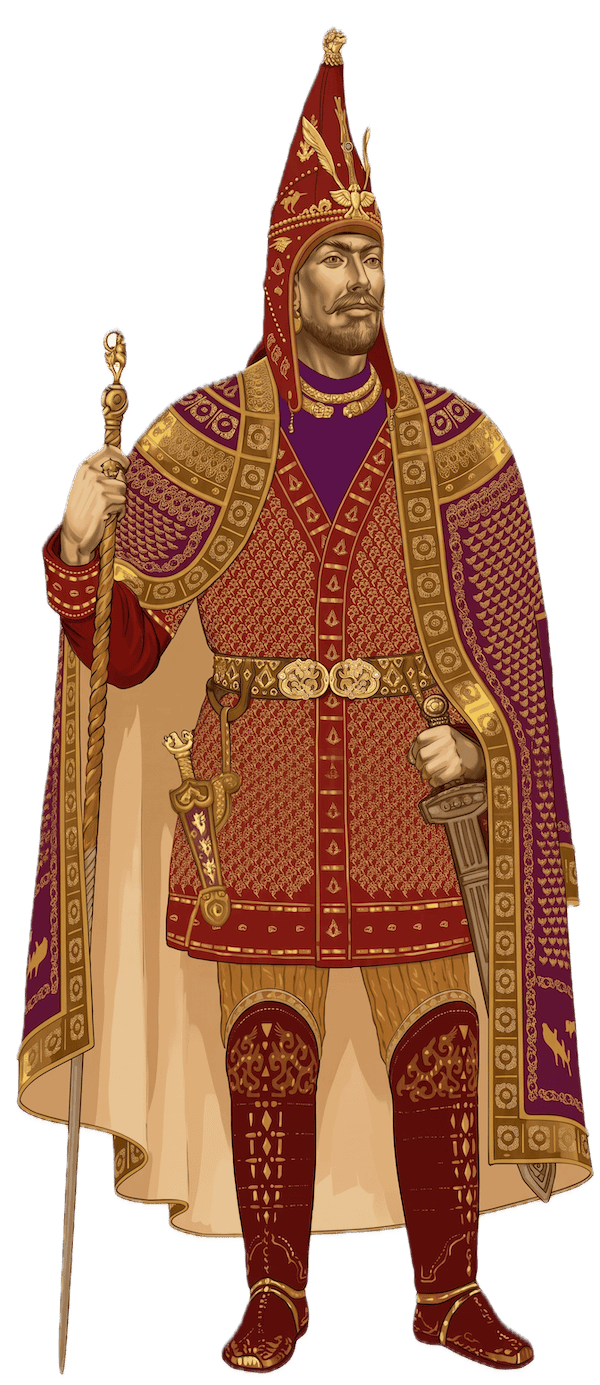

Texts

Texts from the Ancient Writings of Our People

Despite how much researchers around us have written about the Mounds (pyramids), the general public still does not know who built these colossal structures and for what purpose. For this reason, we felt compelled to share our thoughts and insights to fill this void regarding the Mounds.

Rock Mounds are found across the globe—not only in Egypt, Central America, and China, but in other regions of the world as well. Not only researchers, but our readers too have likely observed the striking similarities among these colossal structures.

Although the Mounds stand as separate structures, they form an integral Complex (Ensemble), and contemporary researchers seem not to have grasped the true architectural secret of this Complex. To this day, in our view, researchers have not deciphered the purpose behind the construction of these Complexes, nor the mystery behind the shafts, gallery ascending ramps, and chamber layouts inside the Great Pyramid of Khufu (Cheops). While numerous questions and disputes surround the era in which the Mounds were built, researchers are convinced that the culture and mastery of the People who arrived from an unknown origin to construct such Complexes were extraordinarily advanced.

Why was the mastery and culture of one People so superior compared to others? In our view, one must first seek an answer to this question. Without knowing the language of this People and without understanding the holistic Thought they sought to impart to us, we may never uncover who built the Mounds worldwide, why they were built, and what secrets lie in their Inscriptions. Did these diverse cultural hearths develop entirely in isolation—the Ancient Land of Noble Knowledge in Egypt (Ekibet), the Land of Mound Masters of “Celestial Passage” (Mesopotamia), the Land of Knowledge Masters of “Celestial Flight Weavings” (Sumer), the Land of Ancient Ancestors in the Two Rivers Region (Babylon), the Harappan Civilization along the Indus River, the Syr Darya region, Zhetysu, the Sacred Land of the East (East Turkestan), the fertile lands of Chinese pyramids, and on the other side of the Earth, Peru, the pyramid complexes of Central America, and the ancient Cahokia culture along the Mississippi River—or were they influenced by an ancient, Unified High-Culture People?

One cannot deny that these cultural centers represent a single People of elevated Civilization and profound Knowledge. The central Core of this People’s Knowledge was to demonstrate their astronomical Sciences regarding the Celestial stars (the System of the Celestial Flow) and the Solar System, along with many other branches of knowledge. When observing their architectural and engineering feats, both ancient and modern scholars have written about the methods by which this Ancient Community carved granite stones using specialized tools, built dams, installed drainage and water pipelines, developed medicine and written culture, traveled by sea, and even operated flying apparatuses. At a time when general human development was primitive, how did high-culture Communities in various corners of the world achieve such heights? Although the languages of the Babylonians, Pharaonic Egyptians, and Chinese differed in antiquity, when we examined their ancient written heritage—specifically inquiring what language they originally spoke—we noticed that all these ancient writings originate from a single ancestral People sharing a common language and worldview. Their ancient legends distinctly reflect the hallmarks of a single ancient culture. For instance, the Sacred, Prosperous, and Glorious People who stood beside the Mounds of the “Celestial Way” possessed Elevated Knowledge, and by their message to their descendants—“When the End Times (the Age of Pisces) arrive, our Man who Grasps the Thought of Inscriptions will proclaim it”—we recognized that they were a People of a shared language.

Some researchers have reached the conclusion: “Approximately thousands of years ago, when human civilization reached an impasse, a single Community or People—with the aid of angelic beings sent by the Master Guardians (Tengri)—may have taught other peoples how to study the ‘Celestial Way’, heal the sick, construct irrigation systems, craft stone-cutting tools, and cultivate craftsmanship, art, spiritual life, and all necessities of existence.”

If all of this holds true, one cannot rule out the possibility of traveling along the “Celestial Flow”—following the “Way of the Solar System” and the “Celestial Star Path” onward through the “Celestial Ingathering” to other Galaxies—building colossal structures (Mounds) modeled after the “Celestial Way”, and even creating aerial craft: “Celestial Voyaging Ships” or “Celestial Vessels” (Kokshar). The Thought and Testament that the Pirs sought to leave for their descendants through the Inscriptions on Stone Structures and Mounds (Pyramids, S.S.A.) have endured to this day. The construction technology of the Pyramids at Giza is especially astonishing. The tools with which they were constructed and the technological processes of their engineering remain unknown to this day.

Thus, so that their Testaments might be mastered, the Pirs of this community revived the Thought of the Holy Ones in the lands to which they migrated, carving it onto balbal stones erected beside Stone Complexes (Mounds). If so, the tradition of carving inscriptions inside ancient Mounds and on balbal stones may have continued when they migrated to the Steppe of the Great Ones (Ulyqtylar Dalasy), where they erected balbals. To demarcate their settlements, they established identical anthropomorphic stone statues (badyz tastar)—depicting a warrior holding a chalice in his right hand, a weapon in his left, facing east—along with solar cross markings (kiris), stretching all the way from the Danube and Asia Minor to the heart of China. Should not the People who erected these stone statues share the same language, customs, faith, mindset, and golden artifacts? Are not archaeologists confirming this very premise through the ancient artifacts unearthed across this vast span? What manner of Community or People was this? Inhabiting an immense territory and exerting influence across the entire world, should they not rightfully be called the “Noble, Blessed, and Glorious People”? We sought to understand what Thought the Masters of these Stone Structures and balbal stones expressed in their Inscriptions, and why and for what purpose they built the Mounds. In exploring ancient legends and drawing upon materials by scholars, we strove to comprehend the Thought of the Ancients through our own contemplation and analysis.

Our book dedicated to the subject of “Texts from the Ancient Writings of Our People” consists of two volumes. At the end of the second volume, a unified conclusion for both books is presented.

Author

About the Author

Sabyr Saktaganuly Aituar

Aituar Sabyr Saktaganuly was born in 1954 in the city of Shagadam (formerly Krasnovodsk), Turkmenistan. In 1971, he graduated from a Kazakh school in the city of Aktau, Kazakhstan. In 1981, he graduated from the Faculty of Transport and Highways at Karaganda Polytechnic Institute with a degree in automotive transport. While working in his specialty at automotive enterprises in Aktau, he wrote articles on celestial bodies and trace elements. As the Teachings of the Ancients in ancient Writings became known to the public, at the beginning of the 21st century the author studied the works of mythologist Serikbol Kondybay, and between 2010 and 2022 conducted research to comprehend the Thought of ancient scribes and the original text of ancient writings. The book’s author discovered that the Written Thought of ancient Inscriptions can be understood through the Kazakh language.

During his research, noticing the similarities between ancient inscriptions in Egypt, balbal stone inscriptions in the Orkhon-Yenisey valley, and the texts of Kazakh folk tales, he published his first book in February 2025.

Purchase the Book

Where to find the book

Dear readers, to purchase the first Book, please contact us via the following links:

Note: The printed edition is currently published in Kazakh. International delivery and inquiries are welcome.
For Sponsors & Patrons

Author Support & Sponsorship

The author is actively continuing his in-depth research into ancient inscriptions and ancestral heritage, preparing subsequent volumes and editions. We invite cultural patrons, sponsors, and partner organizations who wish to support this research, the publication of new editions, and translation into other languages to connect with us.

For sponsorship and partnership inquiries:

Contact

Subscribe to Updates

Leave your email to be notified when a new edition is released.